
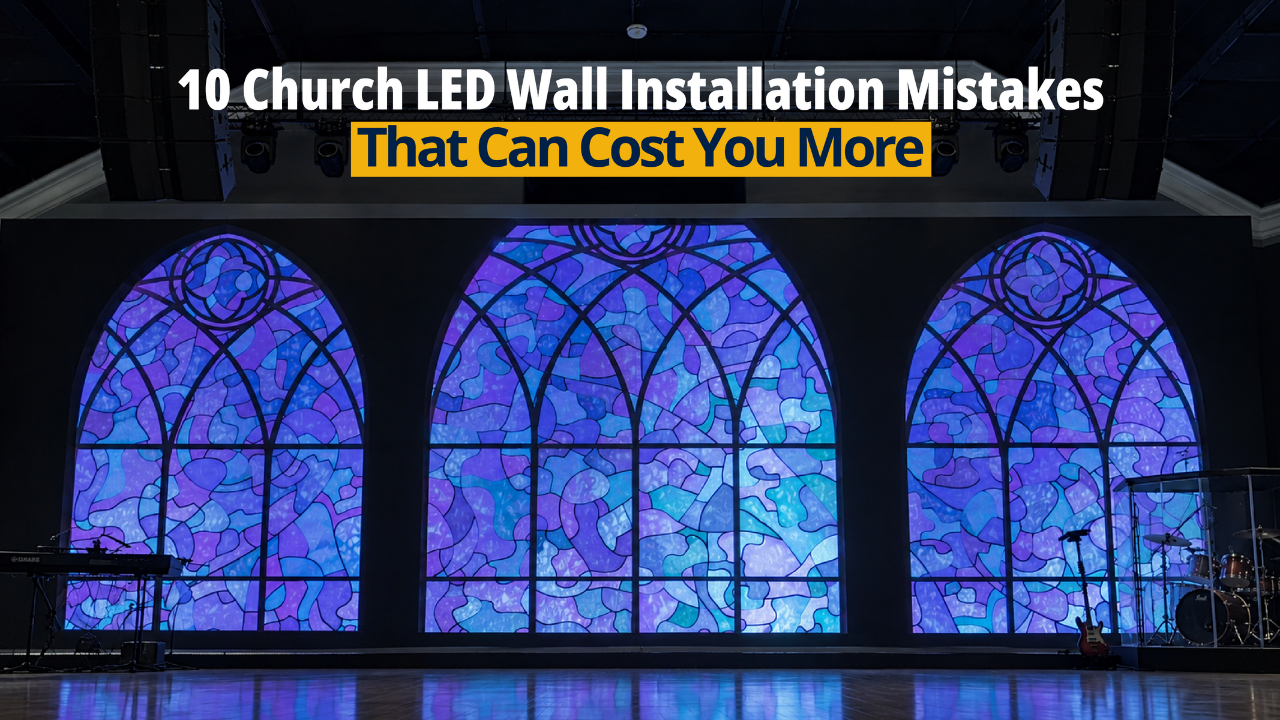
10 Church LED Wall Installation Mistakes That Cost More
Sep 15, 2026Most church LED wall installation mistakes don't show up on day one.
They show up weeks later. A flickering panel. A scheduling scramble. A support call nobody can answer. By then, fixing it costs more than doing it right the first time.
None of these mistakes mean the equipment was bad. They almost always come from skipping a step that felt optional at the time. Or from hoping something would just work itself out on installation day.
Here are 10 mistakes that end up costing churches more than they expected, and what usually causes each one.
10 Church LED Wall Installation Mistakes That Can Cost You More
These church LED wall installation mistakes show up in churches of every size. Most of them trace back to one thing: skipping a planning step or not choosing the wrong display.
1. Skipping a Proper Site Assessment
Some churches jump straight from picking a display to booking installation. They skip the walkthrough. No one checks the mounting area, the ceiling height, or the wiring already in the wall.
Skipping this step doesn't save time. It just moves the problem. Instead of finding it during planning, you find it on installation day. And by then, it costs more to fix.
2. Underestimating the Wall's Structural Weight
A fully built LED wall is heavier than most churches expect. If the wall isn't built to hold that weight, you have a real problem.
Sometimes nobody catches this until the wall is already up. Then fixing it means taking panels back down. That costs more time and money than checking the structure first.
3. Not Planning Dedicated Electrical Circuits
LED walls need a lot of power. Some churches assume their existing outlets can handle it. They usually can't.
An overloaded circuit can trip a breaker mid-service. It can also mean calling an electrician back after installation to add more power. That's an extra cost nobody planned for.
4. Ignoring Compatibility With Existing Production Software or Hardware
A great-looking display can still cause problems. If it doesn't work with your ProPresenter setup, your switcher, or your cameras, you'll find out the hard way.
Some churches don't notice this until their first service on the new wall. By then, the fix means replacing gear that worked fine before or living with a workaround every week.
5. Poor Cable Management and Unlabeled Runs
Messy cables might work fine on install day. But they turn into a real headache the first time something breaks.
A pile of unlabeled wires can turn a five-minute fix into an hour of guesswork. And that often happens during a live service, when you have no time to spare.
6. Scheduling Installation Without a Buffer for the Church Calendar
Some churches schedule installation too close to Sunday. That leaves no room for delays. A part arrives late. A structural issue pops up. Now you're rushing.
Building in some extra time avoids the scramble. It also keeps your Sunday service safe from an unfinished installation.
7. Rushing Panel Alignment During Mounting
Each panel has to line up with the one next to it. Rush this step, and you'll see gaps or crooked seams once the wall powers on.
Fixing bad alignment means taking panels back off and remounting them. That takes far longer than doing it right the first time.
8. Skipping Proper Calibration Before First Use
A new LED wall isn't ready the moment it turns on. Skip color and brightness calibration, and the panels can look inconsistent or just wrong for your sanctuary's lighting.
Skip this step, and you'll likely calibrate it later anyway. Usually right after a service where the screen looked off. That means solving the same problem twice.
9. No Training for the Volunteer Team Afterward
Install the wall and walk away without training your team, and your volunteers are stuck guessing. A simple adjustment turns into a phone call to the installer.
This mistake doesn't cost money right away. But it costs time and stress every time a small question turns into an emergency.
10. Choosing a Provider Based on Price Alone, Without Checking Support
The cheapest quote isn't always the most expensive mistake here. But picking a provider without asking about support after installation often is.
A provider who disappears once the panels are up leaves your church on its own. For calibration issues. For troubleshooting. For anything that comes up later.
Ongoing support isn't a bonus. For a system you'll run every week, it's part of what you're paying for.
Not sure what to look out for in a worship production provider? Read our complete guide: What Is Church Worship Production? A Detailed Explanation
How to Avoid These Mistakes From the Start
You don't need a bigger budget to avoid these mistakes. You don't need fancier equipment either. Almost all of them come down to the same planning steps: a real site check, a structural check, an electrical plan, a compatibility check, and training once the work is done.
|
Want to avoid these mistakes on your church's installation? Book a free consultation, and we'll walk through your space and your production setup and tell you what your project needs to go smoothly. |
Frequently Asked Questions on Church LED Wall Installation Mistakes
What's the most expensive mistake to fix after installation?
Getting the structural weight wrong. If you catch it after the wall is up, fixing it means taking panels back down to reinforce the mount. That costs more than checking the structure first.
Can a church avoid these mistakes without hiring a full-service AVL provider?
Yes, but it takes real planning. Follow the same steps in our installation guide, in order, and don't skip any. That's what prevents most of these mistakes, no matter who does the install.
Is it a mistake to choose the cheapest LED wall provider?
Not always. But choosing on price alone, without asking about support after installation, often leads to the mistakes on this list. Especially the ones about training and long-term support.
How do we know if our church's building can hold an LED wall's weight?
A proper site assessment and structural check will tell you. Do this before you buy any equipment. If your building can't support the display safely, you may need reinforcement or a ground-supported frame instead.
Can bad cable management really cause problems later?
Yes. Wires that aren't labeled or routed well might work fine on day one. But they turn a simple fix into a long, frustrating one later, especially if it happens during a live service.
|
Ready to plan your LED wall installation the right way? Talk with our team about your church's space. Get a clear plan that avoids these common mistakes from the start. |
Don't miss a beat!
New moves, motivation, and classes delivered to your inbox.
We hate SPAM. We will never sell your information, for any reason.