
What Is Church Worship Production? A Detailed Explanation
Apr 10, 2026The term “worship production” is widely used in church conversations. But if you ask different people what it means, you will likely get different answers. Some think it is just about sound. Others think it is about equipment or the people behind the mixing console.
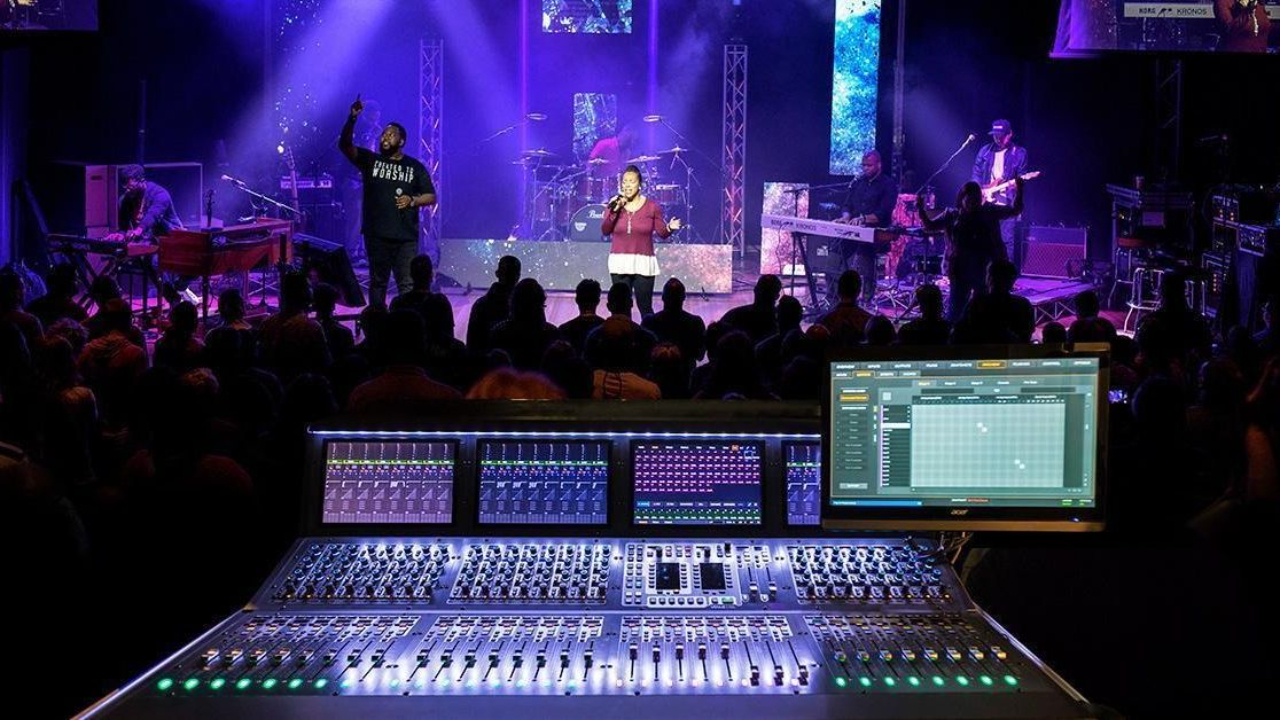
Before going further, it helps to clarify one thing. Church worship production is not just one part of the service. It is not only sound or technology. It includes what people hear, what they see, how the service flows, and how the team works together in real time.
In this guide, we will explain what church worship production really means, what it includes, and how it works during a service.
What Is Church Worship Production?
Church worship production is the planning and coordination of everything that supports how worship is delivered during a service. It involves managing audio, visuals, lighting, stage setup, and team communication so the service is clear and easy to follow.
At a basic level, worship production includes the following:
- Audio – what people hear (microphones, instruments, mixing)
- Visuals – what people see (lyrics, screens, LED walls for churches)
- Lighting – how the stage and room are lit
- People – the worship team and production team working together
When these parts are aligned, the service flows well. People can follow the lyrics, hear clearly, and stay engaged from start to finish.
It is important to understand that worship production is not about performance. The goal is not to impress people. The goal is to remove distractions so people can focus on the service.
What Are the Components of Church Worship Production?
If you’ve been in a church setting, you’ve already experienced these components, even if you didn’t think about them this way.
-
Audio and Sound Engineering
This is the sound you hear during the service. Microphones, instruments, and the pastor’s voice are all balanced so everything is clear. When it works well, you don’t notice it. When it doesn’t, it becomes a distraction.
-
Lighting Design
This is the lighting on the stage. It helps guide attention. During worship, lighting may highlight the team. During the sermon, it becomes more focused and steady.
-
Visuals and Media
These are the lyrics and visuals you see. This includes screens, slides, videos, and LED walls for churches. When lyrics are clear and on time, people can follow without confusion.
-
Stage Design
This is how the stage is arranged. The layout, background, and setup all affect how the service feels visually.
-
Service Planning
This is what happens behind the scenes. The order of songs, transitions, and speaking moments is planned so the service flows without confusion.
-
The Team Behind It All
This includes both the worship team and the production team. They manage everything in real time so the service runs smoothly.
All of these parts work together for one reason: to remove distractions and support worship.
How Worship Production Works During a Church Service
If you’ve been in a church before a service starts, you’ve already seen this process.
It begins with setup. Microphones are placed, instruments are connected, cables are checked, and the system is powered on. Visuals are prepared, lyrics are loaded, and screens are tested.
Next is the soundcheck. This is where everything is tested and adjusted. Microphones are checked, instruments are balanced, and levels are set so nothing is too loud or too low. This is where a proper church soundcheck makes a difference.
After that comes a short rehearsal. The team runs through songs briefly and confirms transitions.
When the service begins, all of this comes together. Audio, visuals, and lighting are managed in real time. And when something is off, people notice immediately.
This is why clear worship production systems and proper AVL integration for churches are important. They ensure everything works together consistently.
What Is the Purpose of Church Worship Production?
At its core, church worship production is not about equipment. It is about creating an environment where people can focus on God without distractions.
Here is what it is meant to do:
-
Help People Hear Clearly
Clear audio ensures both worship and the sermon are easy to understand.
-
Help the Congregation Follow Along
Lyrics and visuals keep everyone in sync so no one is trying to catch up.
-
Support the Worship Environment
Lighting, sound, and visuals work together to create a focused atmosphere.
-
Maintain Flow
Production helps the service move smoothly from one moment to the next.
-
Remove Distractions
When something goes wrong, people notice. Production helps prevent those interruptions.
-
Support Ministry Through Technology
The production team may not be on stage, but they play a key role in how the service is experienced.
-
Extend the Message Beyond the Room
Through livestream and visuals, the message reaches people both in the room and online.
Conclusion
Church worship production is not just about sound, lighting, or screens. It is about how everything works together to support worship, the Word, and the experience of the congregation.
When it is done well, people are not thinking about the technical side. They are engaged in worship and connected to what is happening in the room.
If your church is looking to improve how your services flow, how your team operates, and how your environment supports worship, structure is what makes the difference.
With the right worship production systems, supported by AVL integration for churches, properly used LED walls for churches, and strong worship team development, these improvements become consistent and sustainable.
If you want clarity on how to improve your setup, you can schedule a consultation with Sound of Heaven and take the next step.
Don't miss a beat!
New moves, motivation, and classes delivered to your inbox.
We hate SPAM. We will never sell your information, for any reason.