
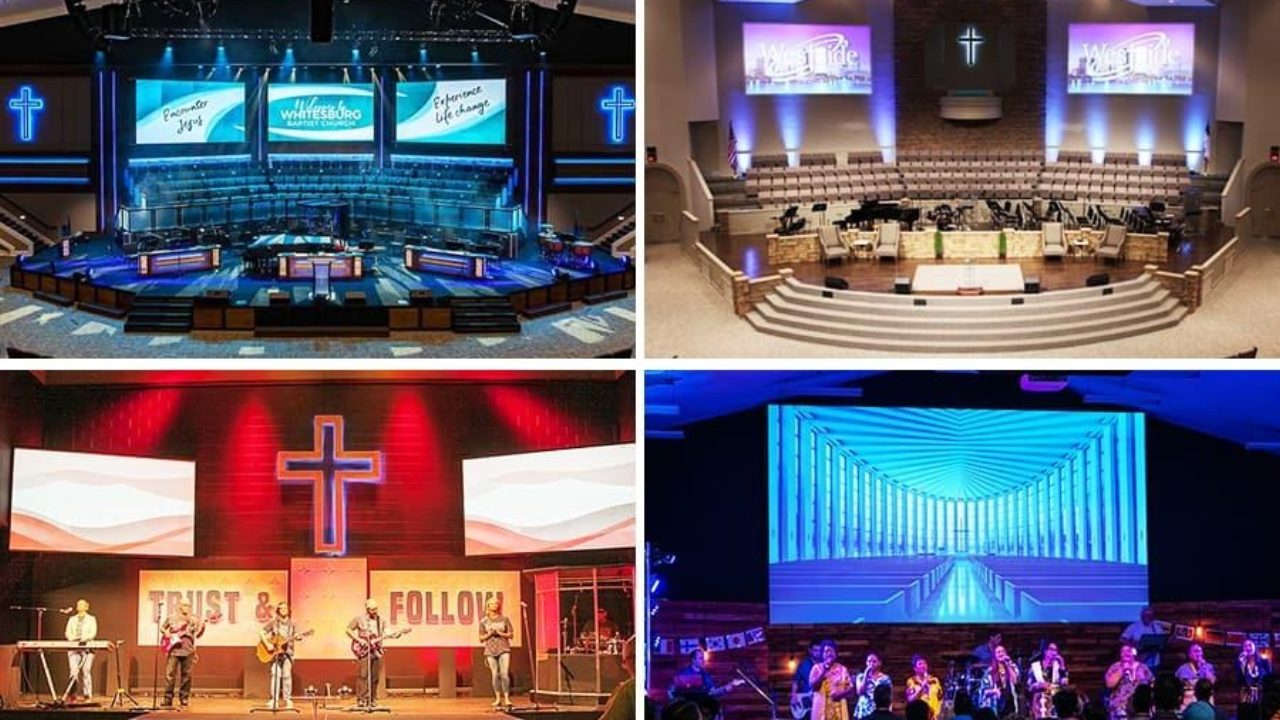
LED Wall Installation Options for Churches
Apr 14, 2026As a pastor or church leader, deciding to install an LED wall is a significant step. Choosing the right installation option is another. And this choice is often one of the most important decisions in the process.
Many churches focus on the screen itself. The size, the clarity, the cost. But LED wall installation for churches is just as important. It affects the screen's appearance from different seats, its safety on stage, and its long-term service to your church.
A quality screen with the wrong installation can still create problems. Limited viewing angles. Structural issues. A lack of flexibility is one of the things that shows up later.
That is why it is important to understand your options before making a decision.
This article walks you through the different LED wall installation options for churches, what each one involves, and how to choose the right fit for your space
LED Wall Installation Options for Churches
The most common LED wall installation options for churches are:
- Wall-mounted LED walls—installed directly onto a solid wall for a permanent, fixed setup
- Truss-mounted LED walls—supported by a freestanding structure for flexible positioning
- Mobile LED walls – mounted on rolling frames for easy movement and repositioning
- Temporary LED wall installations—set up for short-term use in events or shared spaces
Each option is designed to fit different church environments depending on space, structure, and how the stage is used.
Wall-Mounted LED Installation Option
A wall-mounted LED wall is fixed directly onto a solid wall behind the stage. Once installed, it becomes a permanent part of the church setup.
To put it simply, this installation indicates that there is no independent structure supporting the screen. Instead, the building itself carries the weight of the LED wall. This is why the strength of the wall matters.
In many churches, this design creates a clean and simple look. The screen sits flat against the wall, and there are no visible supports or frames. This approach helps keep the stage visually uncluttered.
But this option works best when the space is already suited for it.
What to Consider Before Choosing This Option
First, the wall itself must be strong enough to support the weight of the LED panels. This usually requires proper structural assessment before installation. Without these precautions, the setup can become unsafe over time.
Second, the position of the wall determines where the screen will be. If the wall is too high, too low, or not centered properly, it affects how well people can see the screen from different parts of the room.
Third, once installed, changes are difficult. If you decide to redesign your stage later, the LED wall will limit what you can do unless you remove and reinstall it.
Pros
- Clean and simple stage appearance
- Strong and stable when installed properly
- Minimal ongoing adjustment
Cons
- Cannot be easily moved or repositioned
- Requires a strong structural wall
- Limits future stage design changes
Best For
- Churches with a fixed stage layout
- Spaces with a solid rear wall
- Churches planning a long-term setup
Truss-Mounted LED Wall Installation Option
A truss-mounted LED wall is supported by a freestanding metal structure instead of being attached to a wall.
This means the screen is self-supporting. It does not rely on the building for support. The truss system carries the weight of the LED panels and allows the screen to be positioned anywhere on the stage.
This is one of the most flexible installation options.
For example, if your stage is wide, open, or does not have a suitable wall behind it, a truss-mounted setup allows you to place the screen exactly where it works best.
It also gives more control over height and positioning. The screen can be raised, lowered, or adjusted depending on your stage design and viewing needs.
What to Consider Before Choosing This Option
A truss-mounted system requires enough space to accommodate the structure. It is not just the screen you are placing, but the framework that holds it.
It also requires proper setup to ensure stability. The structure must be securely built and balanced so it does not shift or become unsafe.
In addition, this option usually costs more than a wall-mounted setup because of the extra materials and installation work involved.
Pros
- Flexible positioning and height adjustment
- Works without relying on a wall
- Supports creative stage design
Cons
- Requires more space
- Higher cost due to additional structure
- Needs careful setup for stability
Best For
- Churches with large or open stages
- Spaces without a strong rear wall
- Churches that may change stage design over time
Mobile and Temporary LED Wall Installation Option
Mobile and temporary LED wall installations are designed for flexibility rather than permanence.
Instead of being fixed in one place, the LED panels are mounted on rolling frames or temporary support structures. This allows the screen to be moved, repositioned, or removed entirely when needed.
This is common in churches that do not have a dedicated worship space.
For example:
- churches using school halls
- rented venues
- multi-purpose buildings
In these environments, the stage may need to be cleared or rearranged regularly. A fixed installation would not work well in this case.
What to Consider Before Choosing This Option
This setup requires regular handling. The team needs to assemble, position, and test the screen before each use.
Because it is not permanently fixed, stability depends on how well it is set up each time. If the setup is rushed or inconsistent, it can affect both safety and performance.
It also requires proper storage when not in use, as well as care when moving the panels to avoid damage.
Pros
- High flexibility and portability
- Ideal for shared or multi-purpose spaces
- Can be repositioned as needed
Cons
- Less stable than permanent installations
- Requires repeated setup and dismantling
- Performance can vary if not handled properly
Best For
- Churches in rented or shared spaces
- Multi-purpose halls
- Events, conferences, and temporary setups
Which LED Wall Installation Option Is Best for Your Church?
Choosing the right LED wall installation option is not just about preference. It comes down to how your church space is built, how your stage is used, and how much flexibility you need over time.
Instead of trying to pick based on what looks best, it helps to think through a few practical factors.
1. How Fixed Is Your Stage Layout?
Start with this question: Is your stage layout likely to stay the same for a long time?
If your stage is permanent and not expected to change, a wall-mounted LED wall is often the most practical choice. It keeps everything clean and stable, and once it is installed, it becomes part of the structure of your stage.
However, if your stage design may evolve, or you are still adjusting how your space is used, a truss-mounted setup gives you more flexibility. Repositioning the screen, adjusting the height, or redesigning the stage becomes possible without the constraints of a fixed wall.
2. What Kind of Space Does Your Church Use?
The type of building your church uses matters more than most people expect.
If your church has a solid back wall behind the stage, wall-mounted installation becomes easier and more reliable. But if your space is open, wide, or does not have a suitable wall, a truss-mounted LED wall is often the better solution.
For churches in rented spaces, shared venues, or multi-purpose halls, mobile or temporary LED wall installations are usually the only practical option. These setups allow you to remove or reposition the screen when the space is used for other activities.
3. How Important Is Flexibility Over Time?
Some churches need a setup that stays the same every week. Others need something that can adapt.
If consistency is your priority, a fixed installation works well. It removes the need for constant setup and ensures the screen looks the same every service.
But if your church hosts events, conferences, or different types of services, flexibility becomes more important. In those cases, truss-mounted or mobile setups allow you to adjust the screen based on what is happening.
4. What Level of Setup and Maintenance Can Your Team Handle?
A wall-mounted LED wall requires proper installation upfront, but once it is done, it is relatively easy to maintain.
A truss-mounted setup requires more planning and occasional adjustments, especially if the structure is being modified.
Mobile and temporary setups require the most hands-on effort. The team needs to assemble, position, and test the setup regularly. If this is not done consistently, performance can vary from one service to another.
This is where having clear worship production systems and proper AVL integration for churches becomes important. The installation should match what your team can realistically manage week after week.
5. How Will It Fit Into Your Overall Worship Setup?
An LED wall does not work in isolation. It is part of a larger system.
The installation needs to work well with your:
- audio setup
- lighting design
- stage layout
- camera and livestream setup
For example, the height and position of the LED wall will affect how visible it is on camera. The structure may also impact lighting placement or speaker positioning.
This is why installation decisions should always consider the full worship production systems, not just the screen itself.
It is also important to consider how the LED wall will work with your overall worship production systems and AVL integration for churches. The installation should support your audio, visuals, and team workflow, not work against them.
There is no one-size-fits-all solution. The best option is the one that fits your space, your structure, and how your church operates week to week.
Conclusion
Choosing the right LED wall installation option for your church goes beyond picking a screen. As you’ve seen, the installation affects how the wall looks, how it performs, and how it fits into your space over time.
A wall-mounted setup gives you a clean and permanent look but limits flexibility. A truss-mounted option offers more control and design freedom but requires more planning. Mobile and temporary setups provide flexibility but need consistent setup to work well.
With the right LED walls for churches, supported by proper AVL integration for churches and clear worship production systems, your setup becomes more reliable and easier to manage.
At Sound of Heaven, we help churches evaluate their space, understand their options, and design LED wall installations that work both now and in the long term.
If you want clarity on what setup is right for your church, you can schedule a consultation and take the next step with confidence.
Don't miss a beat!
New moves, motivation, and classes delivered to your inbox.
We hate SPAM. We will never sell your information, for any reason.