
7 Communication Tips for Worship Teams For Effective Service
Apr 17, 2026So it is Sunday morning. The worship leader walks in and without prior communication changes two songs from the setlist. The band finds out during soundcheck. The screen operator finds out when the congregation is already seated. The sound engineer has already set levels for the original songs. And now everyone is scrambling to adjust, on a live service, in front of the church.
Nobody did anything wrong on purpose. The worship leader had a good reason for the change. But because there was no clear process for communicating it, the whole team paid the price.
This happens in churches every single week. And most teams chalk it up to "we just need to communicate better." But that is not specific enough to actually fix anything.
So in this article, we are going to get specific. These are 7 practical communication tips for worship teams that you can start using this week.
Why Worship Team Communication Breaks Down in the First Place
Before we get into the tips, it is worth understanding why this keeps happening. Because most worship teams are not dealing with a people problem. They are dealing with a system problem.
There is no set time for sharing information. There is no agreed place where updates live. There is no habit of including everyone who needs to know. So every week, people fill the gaps with assumptions. And assumptions on a live service always create problems.
The good news is that this is fixable. Not with more prayer meetings or longer rehearsals. With simple, repeatable communication habits that the whole team follows. That is what these tips are about.
7 Communication Tips for Worship Teams
1. Stop Announcing the Setlist on Sunday Morning
If your worship team is finding out what songs they are playing on the day of service, that is the first thing to fix.
Musicians need time to practice. Vocalists need to know the key. The screen operator needs time to build and arrange the slides. The sound engineer needs to prepare monitors and levels. None of that can happen well when the setlist arrives Sunday morning.
The standard to aim for is simple. The setlist should be shared by Thursday at the latest. Not Friday. Not Saturday night. Thursday. That gives every member of the worship team enough time to prepare, ask questions, and show up on Sunday ready to serve instead of scrambling to catch up.
If songs change after Thursday, which they sometimes will, communicate the change immediately. Do not wait until Sunday to mention it.
2. Stop Using WhatsApp as Your Only Team Communication Tool
This one is very common, especially in smaller churches. The entire team runs through one group chat. Song links, service notes, prayer requests, motivational messages, random conversations — all in the same place.
By the time Sunday comes, the setlist from Thursday is buried under thirty other messages. Someone missed it. Someone saw it but forgot. Someone is in the wrong group entirely.
A group chat is fine for quick updates and community. It is not a reliable system for running a worship team production operation. You need a separate, dedicated space for service-critical information. This could be a different channel, a shared document, a team app, or even a simple folder everyone has access to. The point is that when someone needs to find the setlist or the order of service, they know exactly where to look. It is not buried in a chat.
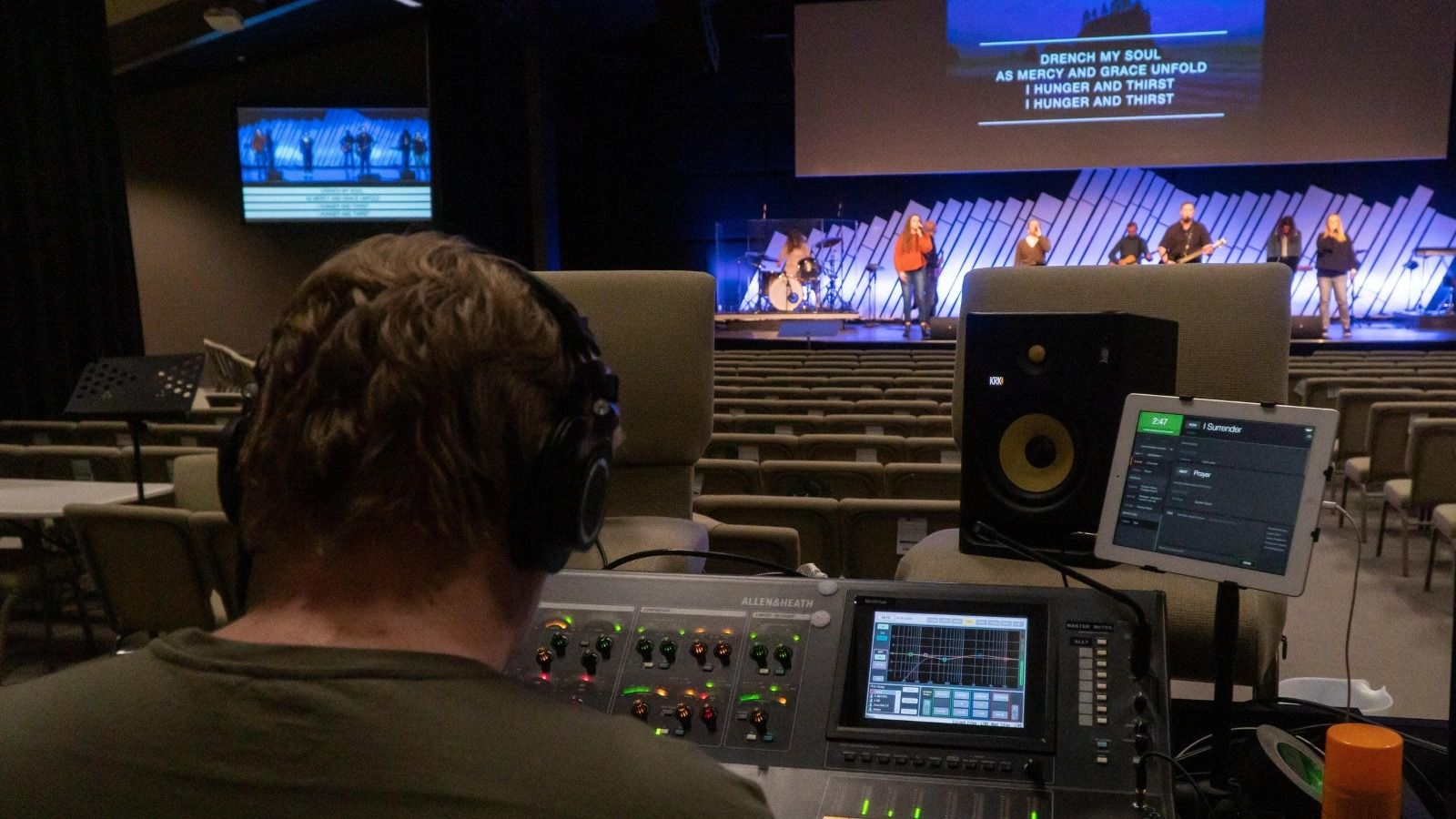
3. Your Sound Engineer Needs the Setlist Too, Not Just the Band
This is the communication gap that most worship teams do not even realize they have.
The musicians get the setlist. The vocalists get the setlist. And then on Sunday, the sound engineer asks what they are playing, and the screen operator is building slides from memory.
Your production team is not separate from your worship team. The sound engineer, the screen operator, and the lighting person are all part of the same service. They need the same information at the same time as everyone else.
When the setlist goes out on Thursday, it should go to the full team. That includes everyone in the room who has a role in making that service happen. This is one of the simplest things a worship team can do to immediately reduce Sunday morning stress. It costs nothing and takes thirty seconds.
This is also one of the reasons why AVL integration matters so much. When your audio, visual, and lighting team are treated as one unit and not separate departments, the whole service runs with more clarity and less confusion.
4. Have a Conversation With Your Worship Leader Before Every Service, Not During
How many times has a sound engineer made assumptions about the service flow because nobody told them what was happening?
The worship leader plans to go straight from the last song into prayer with no break. The sound engineer does not know, so he fades the music out at the wrong moment. The worship leader planned to speak briefly between two songs. Nobody told the screen operator, so the lyrics stay up the whole time.
These are not technical failures. They are communication failures.
A two-minute conversation between the worship leader and the lead sound engineer before every service prevents most of these moments. Not a long meeting. Not a full rehearsal recap. Just a short, direct conversation. What is the flow today? Are there any changes from rehearsal? Are there any spontaneous moments to be ready for?
Two minutes before the service saves ten awkward moments during it.
5. Debrief After Rehearsal, Not Just After Service
Most worship teams only talk about what went wrong after Sunday. But by Sunday, you cannot fix anything for that service. You can only carry the lesson into the next one.
The better habit is a short debrief at the end of rehearsal. Not a long meeting. Five to ten minutes at most. Just enough time to ask, "What felt off?" What needs to change before Sunday? What does the production team need that they do not have yet?
This is where you catch the transition that felt awkward. The song that needs a different ending. The moment where the lights need to shift earlier. The screen that was running a beat behind.
Small conversations after rehearsal prevent big problems on Sunday. And they create a team culture where people feel comfortable raising issues early, rather than holding them in and hoping for the best.
This kind of intentional team practice is part of what strong worship team development looks like. It is not just about talent. It is about building habits that make the team more consistent week after week.
6. Tell Your Team When the Plan Changes, Even Last Minute
This one is about a habit that worship leaders and pastors need to build deliberately.
The pastor decides to extend the message and cut one song. The worship leader feels led to repeat the bridge one more time before the altar call. A speaker drops out and the order of service shifts.
These things happen. They are part of church life. The problem is not that the plan changed. The problem is when the plan changes and only one person knows.
The moment a change happens, communicate it. A quick message to the team chat. A word to the sound engineer. A nod to the screen operator. However your team communicates, use it immediately when something shifts.
The teams that handle last-minute changes well are not the ones where nothing ever changes. They are the ones where everyone finds out at the same time and adjusts together. That only happens when the person who knows communicates fast, every single time, without assuming others will figure it out.
7. Stop Giving Feedback in Front of the Whole Team
This last tip is the one that affects team culture more than any other.
It happens often in rehearsals and soundchecks. A musician plays a wrong chord and gets corrected loudly in front of everyone. A volunteer makes a mistake on the screens and the worship leader calls it out from the stage. A sound engineer misses a cue and hears about it with the whole room listening.
Even when the feedback is correct, the moment damages trust. The person on the receiving end feels embarrassed. Others on the team feel uncomfortable. And over time, people stop showing up. Not because they stopped loving God. Because they stopped feeling safe.
Feedback is necessary. Every worship team needs honest, clear feedback to grow. But the way it is given and the timing of it matter just as much as the content.
The rule is simple. Public praise. Private correction. If someone did something well, say it in front of the team. If something needs to change, have that conversation one on one, after the service or rehearsal, with care and specificity.
This is what keeps a worship team healthy long enough to grow. People stay on teams where they feel respected. They leave teams where they feel exposed.
In Summary
Good church worship production does not start with better equipment. It starts with a team that communicates well enough to use what they already have to the fullest.
Every tip in this article is something your team can implement this week. Send the setlist earlier. Include the production team in every update. Have a two-minute pre-service conversation. Debrief after rehearsal. Communicate changes fast. Give feedback privately.
None of these require a budget. None require new gear. They just require intention and consistency.
And if your church is at a point where you want help building not just better systems but a stronger worship team from the inside out, that is exactly what worship team development is designed for.
Book a free consultation with Sound of Heaven to talk through your team, your production setup, and what the next step looks like for your church.
Don't miss a beat!
New moves, motivation, and classes delivered to your inbox.
We hate SPAM. We will never sell your information, for any reason.