
What NAMM 2026 Reveals About the Future of Music Education in the U.S
Jan 27, 2026Did you attend the NAMM Show 2026?
Or did you know someone who did?
Maybe you didn’t make the trip to Anaheim, but you stayed connected anyway through social media clips, live updates, blog posts, product announcements, or conversations with people who were there. If you were paying attention, you probably noticed something.
NAMM 2026 just felt different and more intentional than the previous years.
As the days unfolded, it became clear that the biggest story of the show wasn’t a new piece of gear or a breakthrough technology. It was the growing emphasis on music education: how musicians are taught, how learning is supported, and how skill is developed over time.
During the NAMM Show 2026, education sessions, advocacy conversations, and professional development took center stage early, well before the exhibit floor opened. That was a very loud signal.
If you’ve been following music education in the United States—as a learner, educator, worship musician, or working creative—you already know why this matters. Music learning today is shaped by access gaps, funding realities, fast-moving technology, and unclear pathways to real mastery. NAMM 2026 didn’t ignore these challenges. It organized itself around them.
So here’s what this article will do: it will help you interpret NAMM 2026 as a directional marker for music education in the U.S. We’ll look at why education is now being treated as a survival issue, what NAMM’s technology messaging really implies for learners, what skills the industry is pushing musicians to develop, how digital platforms are expanding access, and whether we’re seeing a genuine return to skill-first musicianship.
And as you read, keep this in mind: you don’t need a NAMM badge to learn from NAMM. You just need to understand what the industry is prioritizing and why.
Why Is Music Education Becoming a Survival Issue for the U.S. Music Industry?
According to NAMM, the 2026 show “expanded its education” with a robust suite of summits and complimentary sessions across the week, focusing on “vital and in-demand industry topics.” But the bigger question is, why this emphasis now?
Start with what NAMM calls its Circle of Benefits model. NAMM describes this as a business model where proceeds from successful trade shows are reinvested into grants, scholarships, research, industry promotions, and public/government relations programs.
If you think about it, that model only works long-term if the industry has a strong pipeline of musicians, educators, and music makers. No learners means fewer customers. Fewer school programs mean fewer players. Fewer trained teachers means fewer students sticking with it. And fewer skilled musicians eventually reshape the entire industry, from retail to production to performance.
Now notice how NAMM structured the week. NAMM’s Daily Highlights show that Tuesday (January 20) begins with education sessions, community events, a Day of Service focused on local schools, and a SupportMusic Coalition advocacy session. While Thursday is the day the show floor opens. That ordering tells you what NAMM believes comes first.
And that connects directly to the U.S. reality.
If you’ve been following education funding debates in the U.S., you know music programs often depend on how well districts use federal and state funding streams. In 2023, the National Association for Music Education (NAfME) conducted a survey title “The Impact of Federal Funds on Music & Arts Education: Results.” This survey highlights how federal funding impacts student access and how educators track the use of federal funds for arts education across states. The NAfME survey on federal funds collected responses from 48 states (plus the Department of Defense Education Activity) and included 388 respondents, most of whom were classroom teachers and district arts supervisors.
In other words, access is still fragile. So when NAMM pushes education to the front of the line, it’s not charity. It’s the industry responding to a pipeline problem.
You’ve probably seen this in everyday life: lots of people want to “make music,” but fewer have structured pathways to learn. Many learners drop off because they don’t see progress. Many schools struggle with funding, staffing, and instrument access. And educators are often forced to do more with less.
So yes, education is becoming a survival issue, because the future of the U.S. music industry depends on whether learning stays accessible, structured, and sustainable.
How Is Technology at NAMM 2026 Actually Changing the Way Americans Learn Music?
Now let’s talk about the part everyone expects from NAMM: technology.
But if you’ve been following so far, you’ll notice NAMM 2026 didn’t frame technology as “the thing that replaces learning.” It framed it as a system that should support learning.
For example, NAMM’s own daily highlights explicitly list all-day session topics that include “marketing strategy, AI and business, music-education advocacy, and social media.” And NAMM’s official schedule press release describes NAMM U’s education focus as including “AI, leadership, marketing, customer experience, and future retail strategy,” along with topics like tariffs and lesson programs.
That tells you something important: NAMM is increasingly treating tech as part of a broader learning ecosystem—not just instruments and gadgets, but also the systems musicians and educators rely on.
So what does that mean for you as a learner or educator in the U.S.?
It means the industry is starting to recognize a problem many learners already feel: feature-heavy tools can make learning harder. More options don’t automatically create more progress. Sometimes they create overwhelm.
NAMM’s education content also signals a shift toward usability. In NAMM’s own blog about the show’s expanded education lineup, it notes that Tuesday and Wednesday education includes topics ranging from marketing strategy and AI for business to music-education advocacy—again, before the exhibit floor opens. This is a signal that technology’s value is being judged by whether it helps people build stable careers and learning systems—not whether it looks impressive on a demo.
Here’s the practical takeaway: the technology that will matter most for American learners is technology that:
- Makes practice more consistent
- Makes feedback clearer
- Makes learning pathways easier to follow
- Reduces friction for teachers and students
If a tool doesn’t help with those things, it might be exciting—but it’s not educationally meaningful.
And you know this already. The tools you keep using are the ones that actually help you improve, not the ones with the biggest learning curve.
What NAMM’s Education Summits Reveal About the Skills U.S. Musicians Now Need
Recall what we said earlier: NAMM 2026 was not just about what’s new. It was more about what the industry thinks will sustain the future.
One of the clearest examples is the show’s emphasis on summits, not short talks, but structured professional development.
In NAMM’s “expanded education summits” write-up, NAMM explains that Tuesday and Wednesday feature expanded summits (half-day and full-day) designed to deliver “in-depth education” relevant to attendees’ fields.
Then NAMM gets specific.
The Music Education Leaders Summit, for example, is described as a one-day gathering designed for music supervisors, VAPA coordinators, lead teachers, and school counselors, and NAMM frames it as placing attendees “at the intersection of education and industry, where classroom learning meets real-world opportunity.”
That is a huge signal.
It tells you the industry expects musicians and educators to operate with a broader skill set than performance alone.
So what skills are being implied here for U.S. musicians?
If you read NAMM’s programming descriptions, you see repeated emphasis on leadership, business strategy, marketing, customer experience, and lesson programs—alongside pro audio and entertainment technology.
Translation: The U.S. music world increasingly rewards musicians who can do more than play.
That doesn’t mean everyone must become a marketer. But it does mean viability now includes:
- Teaching ability (or the ability to mentor others)
- Business literacy (pricing, positioning, sustainability)
- Adaptability (new systems, new formats, new expectations)
- Leadership (especially in team settings—schools, churches, organizations)
If you’re a learner, this matters because it shapes what the future will reward. If you’re an educator, it matters because your students’ success will depend on more than technical ability.
And if you’ve been following so far, you can see the pattern: the industry is building an ecosystem where skill development includes musicianship plus the real-world competencies that help musicians survive.
Why Digital Platforms Are Becoming Essential to Music Education Access in the U.S.
Now let’s address the access problem directly.
According to NAfME’s reporting and resources from “The Impact of Federal Funds on Music & Arts Education: Results from 2023 Survey,” federal funding and policy decisions meaningfully impact whether students receive quality arts education. And NAfME tracks this through multi-organization survey work.
That’s the institutional side. But on the ground, many American learners still face barriers:
- They live far from strong programs
- They can’t afford private lessons
- They don’t have school access
- They don’t have consistent mentorship
This is where digital platforms become essential, not as replacements, but as bridges.
NAMM’s own history of digital initiatives supports this. During the pandemic, NAMM launched Believe in Music as a global gathering with programming and professional education, plus an interactive marketplace—explicitly designed to connect the industry and support those impacted by COVID.
This matters because it normalized something the U.S. education system was already moving toward: learning and community that isn’t limited by physical location.
And if you’ve been following closely, you can see how NAMM 2026 builds on that. The show is structured around education tracks for music educators and students, and it explicitly includes sessions around advocacy, business, and technology—topics that translate well into hybrid learning formats.
So the real shift is this:
Digital platforms are becoming essential because they widen participation. They allow:
- A student in a smaller town to access high-quality instruction
- A working adult to learn at flexible times
- Educators to scale mentorship through structured content
- Communities to form around progress, not proximity
And that is directly aligned with what many U.S. learners need most: access to consistent guidance.
Is the U.S. Music Industry Shifting Back to Skill-First Musicianship?
If you’ve been following so far, this final question almost answers itself.
NAMM 2026 shows repeated signals that the industry is trying to rebalance: away from gear-as-identity and toward skill-as-foundation.
For instance, NAMM’s schedule highlights include recognition of lesson programs (such as the NAMM Retail Awards, including categories like “Best Music Lesson Program”) and a strong emphasis on education and professional development across the week.
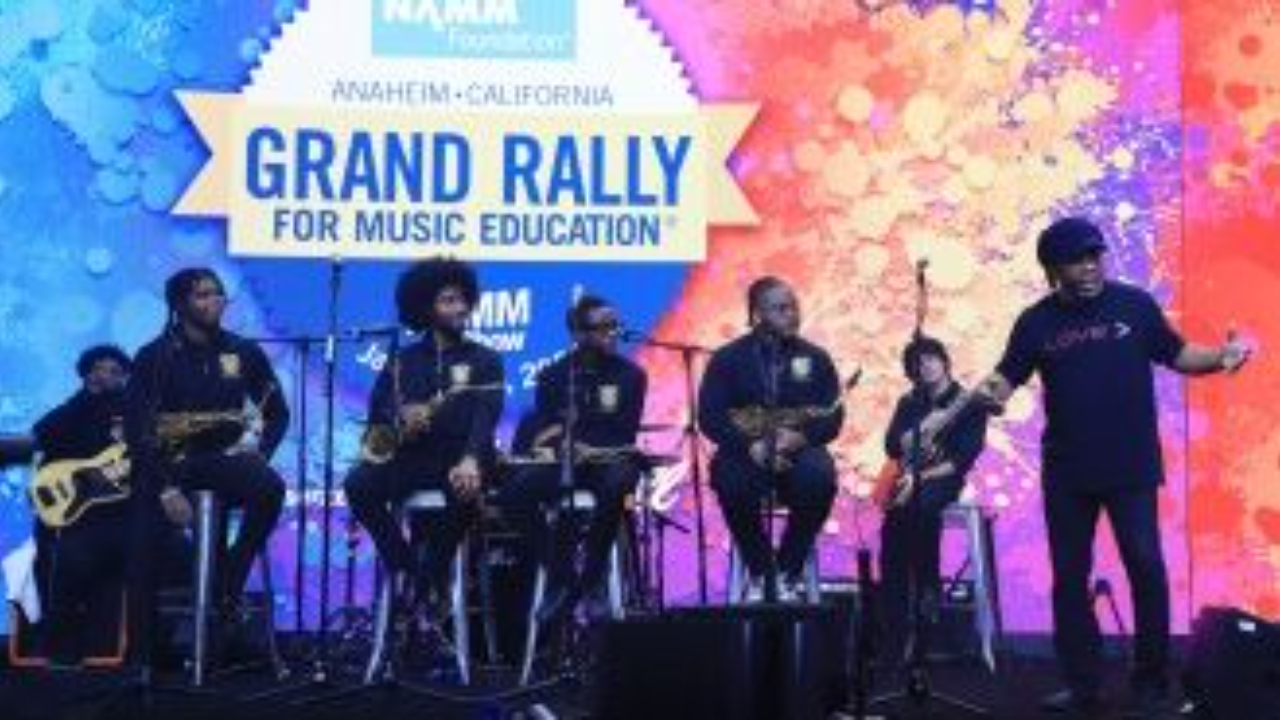
Also notice the way NAMM framed the end of the show. Saturday includes the NAMM U Breakfast Session, described as “The Grand Rally for Music Education,” spotlighting the power of music and music education.
That ending matters. It suggests the show wanted to close by reinforcing the educational mission not just celebrating products.
So what does this mean for you?
It means the industry may finally be rewarding what learners have always needed:
- Structured practice
- Real understanding
- Patient progression
- Feedback and mentorship
- Musicianship built over time
And that also means your choices matter more than ever. If you chase tools but avoid fundamentals, you’ll stay dependent. If you commit to skill-first development, you’ll become resilient—regardless of trends.
That’s what a skill-first industry rewards.
How Musicians and Music Learners Can Position Themselves for the Future NAMM Is Pointing Toward
At this point, the pattern is clear. NAMM 2026 isn’t just reflecting where the industry is headed; it’s pointing musicians toward what will matter most in the years ahead.
So the question becomes practical: How do you position yourself for the kind of future NAMM is signaling?
Here are five directions that align closely with what the show emphasized.
1. Commit to Skill Development Over Short-Term Wins
NAMM 2026 reinforced something many learners already sense: progress comes from consistency.
Rather than chasing every new tool or method, the musicians who thrive are the ones who commit to fundamentals. This means practice routines, theory, listening skills, and structured learning. Skill-first musicianship is becoming the baseline again.
If you’re learning music, this means choosing depth over speed. If you’re teaching, it means guiding students through progression, not just exposure.
2. Learn Within Communities, Not in Isolation
One of the strongest signals from NAMM’s education and advocacy focus is the importance of community-based learning.
Music grows best in shared environments. Where questions are asked, progress is visible, and accountability exists. That’s why learning communities are becoming essential, not optional.
This is exactly where the Sound of Heaven Community fits.
The Sound of Heaven Community exists to support musicians who understand that growth doesn’t happen alone. It’s built around shared learning, intentional practice, encouragement, and long-term development. Not pressure or comparison.
If NAMM 2026 points toward education as infrastructure, then communities are the spaces where that infrastructure actually works.
3. Build Through Collaboration, Not Just Consumption
Another quiet shift reflected at NAMM 2026 is the move from passive learning to collaborative creation.
The future of music education isn’t only about taking lessons. There is a strong emphasis on building structured learning experiences together. That’s where collaboration becomes powerful.
You can leverage Music Course Collaboration from Sound of Heaven and begin building your voice.
Rather than isolated lessons or one-off tutorials, course collaboration focuses on creating guided learning pathways with experienced musicians and educators. It allows knowledge to be shared intentionally, scaled responsibly, and applied practically.
For learners, this means access to clearer learning journeys.
For educators and musicians, it means contributing meaningfully to how others grow.
NAMM’s emphasis on professional development and education summits reflects this same direction: learning works best when it’s designed together.
4. Use Technology as Support, Not a Substitute
As discussed earlier, NAMM 2026 reframed technology as a support system.
For you, this means being selective. Tools should help you practice more consistently, receive better feedback, and understand music more deeply, not distract you or replace discipline.
The musicians who adapt best will be the ones who ask a simple question before adopting new tools: Does this help me learn better?
5. Think Long-Term, Not Event-to-Event
Finally, NAMM 2026 encourages a longer view.
Whether you attend shows or follow from afar, the goal isn’t to react to every industry moment. It’s to build a learning foundation that lasts—one that grows with you as the industry evolves.
That means investing in skill, community, collaboration, and structured growth. Not because it’s trendy, but because it’s sustainable.
Summing it up…
According to NAMM’s education programming, official schedule announcements, and the way the week was structured, the just-concluded NAMM Show 2026 offered more than industry updates. It offered direction.
Education is being treated as essential infrastructure. Technology is being reframed as learning support. Professional development is being elevated. Digital platforms are widening access. And musicianship is being re-centered as a craft.
If you’re serious about learning music in the United States—or helping others learn—these signals are not abstract. They’re practical.
And if you’ve been following so far, you already know the takeaway:
The future belongs to musicians who build skill first, use technology wisely, and stay committed to learning—long after the show floor closes.
Don't miss a beat!
New moves, motivation, and classes delivered to your inbox.
We hate SPAM. We will never sell your information, for any reason.