
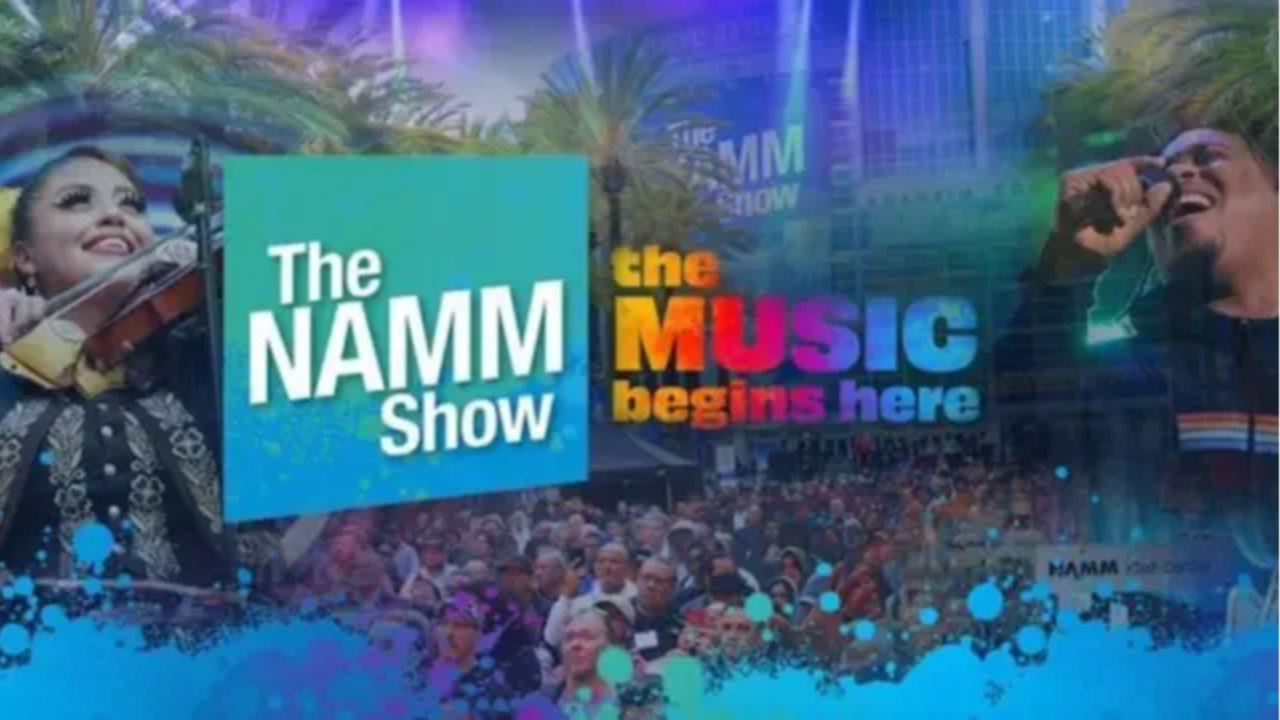
NAMM 2026 Is Live: What Musicians and Music Learners Should Pay Attention To
Jan 24, 2026Right now, much of the global music industry is gathered in Anaheim, California.
Manufacturers, educators, sound engineers, worship leaders, retailers, technologists, and industry decision-makers from around the world have convened for the NAMM Show 2026. The NAAM show is an annual event that quietly shapes how music is made, taught, and supported across the world.
If you’re a musician or a music learner, it’s easy to assume this event has little to do with you. NAMM can look like a closed-door industry gathering focused on products, deals, and brands. That assumption misses the bigger picture.
NAMM is not just where music tools are shown. It’s where the industry reveals how it understands music, learning, and musicianship at this moment in time. And in 2026, that understanding matters more than ever.
Moreover, if you’ve been paying attention to how the industry has evolved over the last few years, you’ll notice something important.
This year is less about exhibits and much more about direction.
For musicians, music learners, educators, and worship teams, NAMM 2026 isn’t valuable because of what’s new. It’s valuable because of what it reveals about how the industry now understands learning, growth, and musicianship.
Are you a musician in the making? You are an already established musician? And would you love to attend the NAAM show in the future? This article is for you if you fall into any of these categories.
This article is a grounded interpretation of what NAMM 2026 represents as it unfolds and why that matters to anyone serious about developing musical skill.
What Is The NAMM Show, and Why Does It Matter to Musicians?
NAMM stands for the National Association of Music Merchants. Founded in 1901, it is one of the oldest and most influential trade associations in the music, sound, and live-event industry.
But NAMM is not simply an event organizer.
At its core, NAMM exists to strengthen the music products industry and promote the joy and benefits of making music. That mission shapes everything it does, from the trade shows it produces to the research it funds, the education it supports, and the policies it advocates for.
NAMM operates on what it calls a Circle of Benefits model. The idea is simple but powerful:
Revenue from trade shows and membership is reinvested back into the industry through education programs, research on music learning, advocacy for arts education, and initiatives designed to get more people making music.
That matters because it means NAMM’s priorities are long-term, not seasonal.
When NAMM emphasizes learning, education, and access, it’s not a marketing move. It’s a reflection of where the industry believes its future depends.
What Does the NAMM Show Actually Represent?
The NAMM Show itself is one of the world’s largest music-industry trade events. It brings together thousands of brands and tens of thousands of attendees each year, with participation restricted to industry professionals, educators, media, and artists connected to NAMM member companies.
During the show, manufacturers showcase what they believe musicians will need next. Educators discuss how learning is changing. Retailers plan what they will support for the coming year. Policymakers and advocates align around music education and access.
In other words, the NAMM Show reflects where the industry is placing its bets. Not just commercially, but culturally and educationally.
That’s why musicians and learners should pay attention, even if they never step foot on the show floor.
How NAMM Connects to Music Education and Learning Communities
The NAMM show is a clear portrayal of the belief that music grows best in environments where learning, encouragement, and shared purpose exist. And that belief is not limited to trade shows or industry professionals. But it also applies directly to how musicians develop over time.
This is why the Sound of Heaven Community exists.
The Sound of Heaven Community is built around the idea that musicianship is not a solo journey. It’s a shared process shaped by consistency, guidance, and connection with others who are committed to growth. Rather than focusing on performance alone, the community emphasizes learning well, practicing intentionally, and developing skills within a supportive environment.
For musicians and music learners, this kind of community provides something the industry increasingly recognizes as essential:
a space where progress is nurtured, questions are welcomed, and growth is sustained over time.
In many ways, the Sound of Heaven Community reflects the same long-term values NAMM advocates for: education, access, and the joy of making music as part of daily life, not just isolated moments of performance.
Why Course Collaboration Matters for Musicians and Educators
One of the recurring themes behind NAMM’s mission is professional development. Which ensures that musicians and educators have access to meaningful learning opportunities that extend beyond one-off experiences.
This is where our Music Course Collaboration plays a critical role.
Music Course Collaboration at Sound of Heaven is centered on partnering with experienced musicians, educators, and practitioners to create structured courses that focus on real skill development. Instead of isolated lessons, these collaborations produce guided learning paths that help musicians grow step by step whether they are learning piano, strengthening theory, expanding their repertoire, or refining their musical foundation.
For musicians, this means access to learning that is:
- Grounded in real experience
- Structured for clarity and progression
- Designed for long-term growth rather than quick wins
For educators and contributors, course collaboration offers a way to share knowledge in a format that reaches beyond individual classrooms or sessions, creating lasting impact within a wider learning community.
In the context of NAMM 2026, where education and sustainable musicianship are increasingly central, course collaboration represents a practical response to the industry’s direction: turning insight into accessible learning that musicians can actually use.
NAMM 2026 Show Breakdown: Education, Innovation, and What Musicians Should Notice
Rather than building momentum purely around product launches, this year’s show unfolds in stages that place education, advocacy, community, and musicianship at the center.

Tuesday: Education, Advocacy, and Service Set the Tone
NAMM 2026 opens not with the show floor, but with learning and impact.
The first day is anchored in education sessions, thought leadership, and community-driven initiatives. Events like the Retail Financial Summit focus on sustainability and long-term viability, while the Day of Service places music education directly into local schools—underscoring NAMM’s belief that music learning is not optional, but foundational.
Advocacy sessions led by the SupportMusic Coalition further reinforce this direction, focusing on real-world strategies for protecting and advancing music education through policy and community engagement.
The message on day one is clear: before products, before performances, the industry must invest in people and learning.
Wednesday: Professional Development Takes Center Stage
The second day of NAMM 2026 is almost entirely dedicated to growth through education.
Professional summits for marketers, studio professionals, educators, and industry leaders run throughout the day, alongside sessions accessible to all badge holders. Topics span business strategy, pro audio, entertainment technology, and music education leadership—signaling that knowledge and skill development are being treated as industry essentials, not extras.
The evening’s Retail Awards further reinforce this mindset by recognizing excellence not just in sales, but in music lesson programs and omnichannel learning experiences.
This is a day designed to sharpen thinking, expand perspective, and strengthen the ecosystem behind music-making.
Thursday: Innovation Meets Context
Thursday marks the opening of the show floor, where more than 1,800 exhibitors present new products and technologies. But even here, the structure is intentional.
The day begins with industry insight sessions that frame innovation within a broader context, followed by education tracks that serve artists, educators, students, and professionals alike. Policy discussions addressing tariffs, compliance, and education advocacy run alongside technical sessions—reminding attendees that innovation doesn’t exist in a vacuum.
The evening events reflect the same balance. From professional networking gatherings to the TEC Awards and the Yamaha Night of Worship, the focus is not just on technology but on how music is experienced, shared, and sustained in real communities.
Friday: Inspiration, Leadership, and Representation
Friday continues the rhythm of education and innovation, but with a stronger emphasis on leadership and representation.
Morning sessions look ahead to the future of the industry, while the show floor remains active with new ideas and global collaboration. Policy sessions highlight resources available to businesses, reinforcing the practical realities musicians and organizations face.
Evening events like the Women of NAMM Reception and the She Rocks Awards bring visibility to leadership, contribution, and influence within the industry—while the Yamaha All-Star Concert celebrates music as a unifying force at the heart of the event.
Saturday: A Closing Focus on Music Education and Legacy
The final day of NAMM 2026 brings the week full circle.
Education remains central, with sessions dedicated to the power and future of music learning. The show concludes not with a final product push, but with celebrations marking NAMM’s 125th anniversary, excellence in live event production, and live music spread across the campus.
It’s a closing that emphasizes legacy, responsibility, and continuity—reminding attendees that the industry exists not just to innovate, but to endure.
Why NAMM 2026 Feels Different
Every NAMM Show carries the tone of its time.
Some years are loud and experimental. Others respond to uncertainty, economic pressure, or cultural change.
NAMM 2026 feels notably grounded.
The conversations surrounding this year’s show—both in official programming and in the wider industry discourse—suggest a shift away from excess and toward intention. Instead of asking how much more can be added, the industry seems to be asking what actually helps.
That shift is subtle, but it’s meaningful.
It signals an industry that is re-examining how musicians grow, how learners are supported, and how technology fits into that process without replacing it.
What This Means for Music Learners
If you’re learning piano, studying theory, training your ear, or rebuilding fundamentals, NAMM 2026 offers a quiet reassurance.
The industry is beginning to align more closely with how learning actually works:
- progress through consistency
- growth through feedback
- confidence through understanding
Instead of pushing learners to adapt to increasingly complex systems, there’s a visible effort to reduce friction and intimidation. That doesn’t mean lowering standards—it means creating clearer pathways.
For learners, this matters because it shifts the focus from accumulation to development.
Why Worship Musicians Should Pay Attention During NAAM Show
For worship musicians and church music teams, the relevance of NAMM 2026 goes even deeper.
Worship environments value reliability, clarity, preparation, and sustainability. Excess rarely serves the mission. Consistency does.
The broader direction reflected at NAMM this year aligns closely with those values. There’s a renewed respect for musicianship as something built patiently, not purchased quickly.
That alignment reinforces an important truth for worship teams:
Technology is most effective when it supports discipline, not when it competes with it.
NAMM 2026 suggests an industry that increasingly understands that distinction.
What to Expect as NAMM 2026 Continues
As the event unfolds, the core narrative is unlikely to change dramatically. Instead, expect refinement rather than reversal.
- More emphasis on education.
- More discussion about sustainability.
- More clarity around long-term musicianship.
As usual, NAMM’s influence is rarely immediate. You just find it showing up gradually in classrooms, rehearsal spaces, churches, and practice rooms months after the show ends.
Don't miss a beat!
New moves, motivation, and classes delivered to your inbox.
We hate SPAM. We will never sell your information, for any reason.