
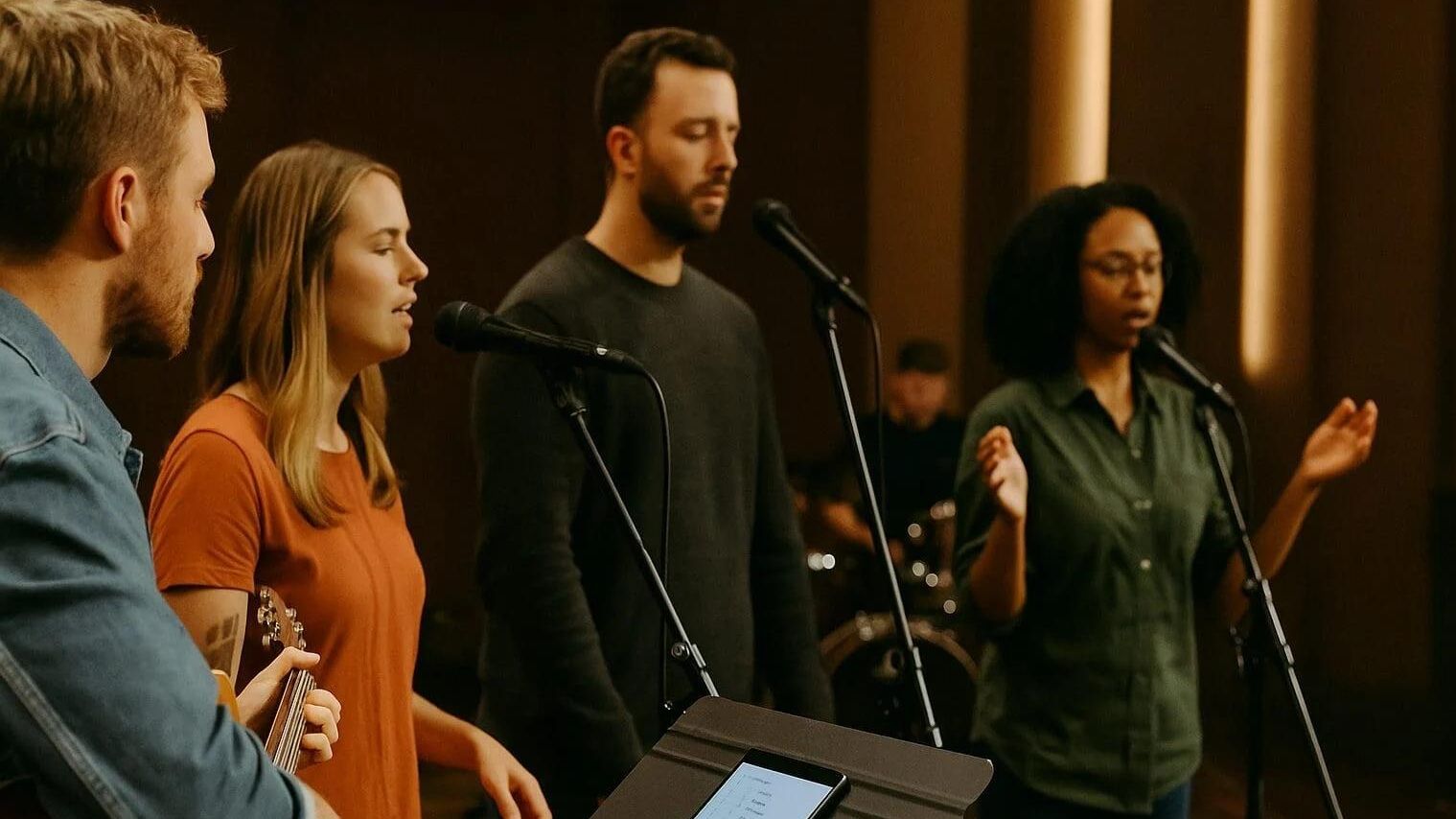
How to Train Worship Team Members Using the Buddy System (Step-by-Step Guide)
Apr 09, 2026The buddy system is not a new idea. For years, schools, workplaces, and training environments have used this approach to help people learn faster without feeling lost. But when it comes to how to train worship team members, many churches still rely on informal methods that lead to confusion and inconsistency.
When a new member joins a worship team, they are not just learning songs. They are learning how rehearsals flow, how the team communicates, what is expected on stage, and how services are led. Without a clear process, this can feel slow and overwhelming.
That is where the buddy system becomes practical. Instead of leaving new members to figure things out, you pair them with someone experienced who can guide them step by step during real rehearsals and services.
This article will show you how to train worship team members using a simple system that improves consistency, builds confidence, and supports long-term worship team development.
What Is the Buddy System in Worship Team Training?
Recall we said that the buddy system is a way to train someone by pairing them with a more experienced person who guides them step by step. In a worship team, this simply means a new member is assigned to someone who already understands how the team works.
Instead of trying to figure things out alone, the new member learns by staying close to their buddy during rehearsals and services. They watch how songs are arranged. How cues are given. And how the team moves from one part of the service to another.
The buddy’s role is not formal teaching. It is practical guidance. They show what to do, explain what is happening, and correct when needed. They may say when to enter, how to follow the leader, or how to adjust during transitions.
This works better than telling someone to “just follow along” because the learning happens in real time. The new member is not guessing. They have someone helping them understand each step as it happens.
How to Train Worship Team Members
If you need a simple way to train worship team members without overcomplicating the process, here is what works:
- Pair new members with experienced team members
- Train them during real rehearsals, not just explanations
- Let training continue into live services through observation
- Give consistent, practical feedback
- Build confidence over time through repetition
This approach works because it turns training into a system, not a one-time event. It also supports long-term worship team development and helps your team become more consistent week to week.
5 Steps to Train Worship Team Members Using the Buddy System
Step 1: Pair New Members With the Right Person
Now that you understand how the buddy system works, the first step is pairing each new member with the right person. This step matters more than most people think. If the pairing is wrong, the training will struggle from the start.
Do not choose based on skill alone. A highly skilled musician who lacks patience will not train someone well. Look for someone with the right attitude, patience, and availability. They should be willing to guide, answer questions, and stay consistent with the new member.
It is also important to match roles correctly. A vocalist should be paired with another vocalist. An instrumentalist should be paired with someone who plays the same instrument. This makes learning more practical because they are dealing with the same responsibilities.
When pairing is done poorly, new members get confused, ask the wrong questions, or do not get the help they actually need. But when pairing is done right, learning becomes faster and more natural.
Step 2: Train Through Rehearsals
Once the pairing is set, training does not happen through long explanations. It happens through real experience.
The new member learns by staying close to their buddy during rehearsals. They begin to notice how things actually work. They see how cues are given, how transitions happen, and how the team flows from one part of the song to another.
For example, a new vocalist may learn when to come in by watching their buddy instead of guessing. A keyboardist may learn how to follow spontaneous changes during worship by observing how their buddy responds.
Step 3: Train Through Live Services
Training through rehearsals should continue into live services, where the new member is not thrown in immediately. Instead, they shadow their buddy. They watch, follow, and gradually take on small parts over time.
This kind of training connects directly to how you build a worship team that is consistent, not just talented. It also improves how your team handles rehearsals and even your soundcheck structure, because people understand what to do before the service starts.
Learning this way is faster because it is practical. The new member is not just told what to do. They see it and do it.
Step 4: Give Feedback
Training does not stop at observation. Growth happens through feedback and consistency over time.
The buddy plays a key role here. During rehearsals or after songs, they give real-time feedback. This could be something as simple as correcting timing, adjusting harmony, or pointing out missed cues. The goal is not to criticize, but to help the new member improve step by step.
At the same time, you as the leader support both people. You guide the buddy and make sure the new member is progressing well. This keeps the system working and prevents gaps in training.
Step 5: Build Confidence
As the process continues, this is what happens: The new member begins to gain confidence. They become more consistent, more aware, and more comfortable during rehearsals and services.
This is why the buddy system works. It treats training as a process, not a one-time event. As time goes on, new members do not just learn what to do. They become part of the team.
Over time, this kind of structure helps you build a team that is not only skilled but also aligned, which is a key part of strong worship production systems in any church.
Conclusion
Training new members in your worship team becomes difficult when everything depends on you. You explain during rehearsals, correct during services, and repeat the same instructions week after week. That approach works for a while, but it does not scale, and it does not build consistency.
The buddy system fixes this by introducing a clear and repeatable process. Instead of leaving new members to figure things out, you pair them with someone who already understands how your team works. Training then happens where it matters most, during rehearsals and live services.
New members learn cues, transitions, timing, and expectations in real time. With the right pairing, consistent observation, and regular feedback, they grow in both skill and confidence. Over time, this becomes a sustainable system that supports both your team and your services.
If you want to build a worship team that is easier to train and more consistent week to week, Sound of Heaven helps churches put the right structure in place. From worship team development to AVL integration for churches, LED walls for churches, and complete worship production systems, we help you create an environment where both people and systems work together.
You can schedule a consultation to review your current setup and take the next step toward a more structured and effective worship team.
Don't miss a beat!
New moves, motivation, and classes delivered to your inbox.
We hate SPAM. We will never sell your information, for any reason.